
The recovery in Gilt yields over the past fortnight has not been caused by any improvement in British politics.
The 10 year yield is now around 4.8%, its lowest since mid-April, after it spiked to 5.13% in mid-May. But the rally has been driven by oil markets and the US-Iran peace talks. The domestic political risk that should have troubled investors most has not gone away — it has simply been set aside.
A possible agreement between the Middle East belligerents, with the Strait of Hormuz reopening, has sucked some of the geopolitical risk premium out of crude oil prices and eased the inflation concerns that had been pressing up the long end of the Gilt curve.
That relief is real, but largely spent. Yields have fallen around 25bp from their mid-May highs, leaving little room for a further rally.
Meanwhile, the UK's GDP shrank 0.1% in April, chipping away at the growth assumptions the Debt Management Office's financing remit rests on.
What looked like calm was a market biding its time, not a fresh show of confidence in the public finances.
Sequencing the risk
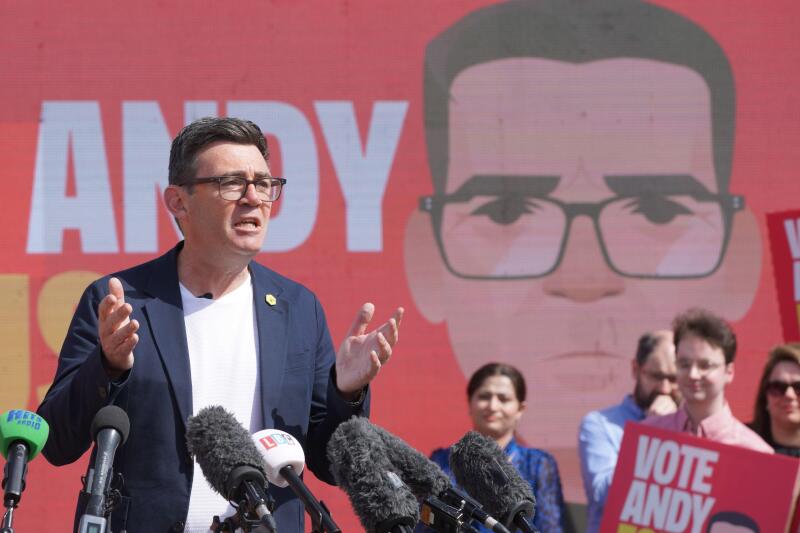
The Makerfield by-election on June 18 should hand Andy Burnham the House of Commons seat he needs to run for the Labour leadership. The polls favour him, though not by enough to bank a result, and the market has been sensible not to over-read a contest decided in one corner of Greater Manchester.
A clean win for Burnham is expected to deliver a muted rally for Gilts as some of the immediate political uncertainty would be removed. Rather than price the eventual outcome, the Gilt market is taking the political risk one stage at a time.
The next stage, if Burnham wins, would almost certainly be a contest in which Burnham would challenge Sir Keir Starmer for the Labour leadership, and therefore the premiership.
The harder question — what kind of fiscal policy a Burnham government would actually run — is being held back for the run-off stage of a leadership election later in the summer.
Burnham has already committed to stick to the present government's fiscal rules, so the borrowing remit and the Office for Budget Responsibility's analysis of the government's finances should, in theory, stay the same.
What would change with a more fiscally activist prime minister is the odds of the government actually delivering its fiscal targets.
That is Budget execution risk — the chance that promised tightening might be watered down or delayed, and the government might borrow more than the published remit assumed.
Forecasts are easy to price — delivery is the hard part. Nothing in the OBR's arithmetic tells you whether a government can hold its own backbenchers to a spending line.
The framework question
The lazy trade — looser leader equals wider premium — is one the market has rightly left alone. Burnham has gone out of his way to commit to a fiscal framework, and his campaign has dialled back the sharper anti-market language of a few weeks ago.
It had no wish to trigger a Gilt sell-off now that would haunt it in government. The lesson of the Truss-Kwarteng episode in 2022 — that the market punished what it saw as a reckless plan to borrow more — has clearly hit home.
Which is why the would-be leader's rhetoric is not the thing to watch.
What will matter is what happens when a fiscal framework, however sincerely meant, meets the parliamentary maths and the spending appetite of a party that has just changed its leader.
Promising to be scrutinised is not the same as surviving the scrutiny.
The real test is the remit
If fears of fiscal laxity do crystallise, they will not announce themselves in the front end, but at the long end, in a steeper curve and a wider term premium — the part of the curve the DMO has at times leaned on in this year's syndications.
The real test is whether the fiscal framework can survive the leadership fight and the autumn Budget — whichever chancellor ends up delivering it.
The peril for the long end is a mid-year revision of the borrowing remit, which would push more Gilt supply into a market still waiting to see that framework take shape.
For now, President Trump's desire to end his war has bought the Gilt market time. Its reckoning has been deferred to the summer, but not cancelled.
The relief oil handed investors this month was worth taking. Mistaking it for the all-clear would be a costly error.